In the world of power generation, the gas turbine is a marvel of engineering, converting fuel into massive amounts of energy. But at its core lies its most critical and demanding section: the Hot Gas Path. At Global Tech Services, LLC (GTS), we know that understanding this path is key to appreciating the reliability and performance we help deliver through our high-quality OEM-equivalent parts.
Let’s take a look inside this challenging environment and see why the components here are so vital to your operation’s success.
What is the Hot Gas Path?
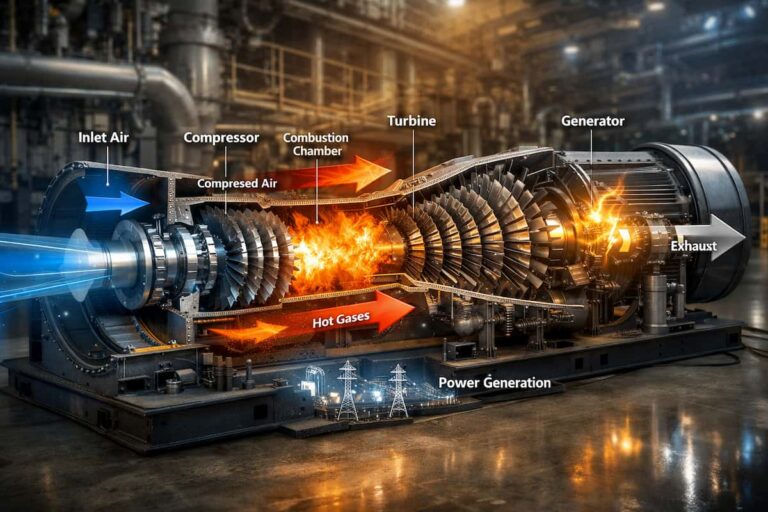
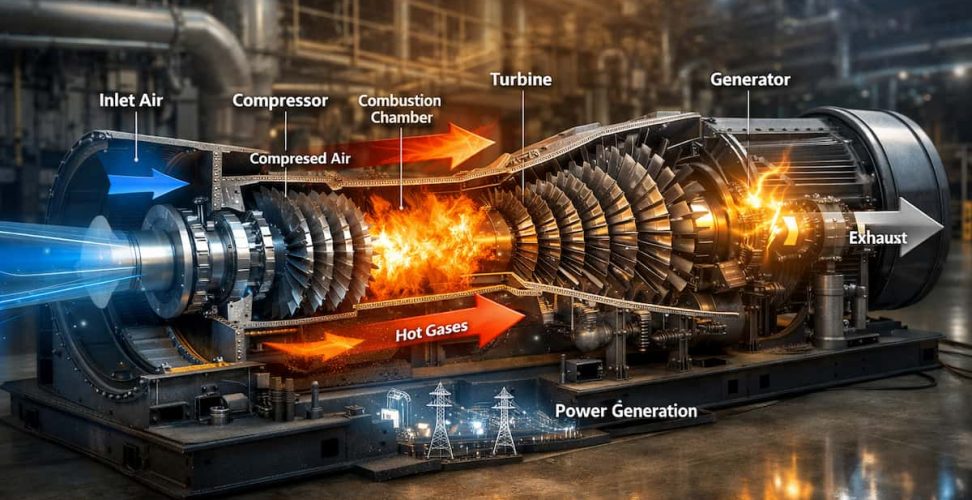
The hot gas path is the section of the gas turbine that is directly exposed to the flow of combustion gases. It begins right after the combustion process and extends through the turbine section itself. This is where the thermal energy of burning fuel is converted into mechanical energy to spin the generator.
The journey typically includes these critical components:
- Fuel Nozzles: The journey starts here. These components atomize and inject fuel into the combustor. Their precise operation ensures efficient and stable combustion.
- Transition Pieces: These components act as a duct, channeling the hot gases from the can-annular combustors (in some turbine designs) to the first stage of the turbine nozzles.
- Turbine Nozzles (Stators) & Buckets (Blades/Rotors): These are the heart of the path. Nozzles accelerate and direct the gas flow onto the buckets, which are attached to the rotating turbine wheel, extracting energy to turn the shaft.
The Demanding Environment
The conditions within the hot gas path are among the most extreme in any industrial machinery. Temperatures can soar to over 2,500°F (1,370°C)—well above the melting point of the base metals used to make the components.
To survive, these parts rely on:
- Advanced Materials: Superalloys, often nickel or cobalt-based, are used for their high-temperature strength and resistance to creep (slow deformation under stress).
- Sophisticated Cooling: Many nozzles and buckets are not solid metal. They feature intricate internal passages that allow cooler, compressed air from the turbine’s compressor to flow through them, creating a protective layer of cooler air around the part (film cooling).
The Importance of Quality in the Hot Gas Path
Given these extreme conditions, the quality and integrity of hot gas path components are non-negotiable.
Even minor imperfections can lead to:
- Reduced Efficiency: Changes in nozzle geometry or blade surface finish can disrupt the precise gas flow, lowering output.
- Premature Failure: Cracking, oxidation, or erosion can lead to component failure, potentially causing catastrophic damage downstream.
This is where GTS plays a crucial role. We understand that your turbines need to run reliably, and extended lead times for OEM parts can be a major operational hurdle.
GTS: Your Partner for Hot Gas Path Integrity
Whether you are supporting GE, Westinghouse, or Siemens industrial gas turbines, having a reliable source for these critical parts is essential. At GTS, we provide a complete array of high-quality, new OEM-equivalent components for the hot gas path.
From precision-engineered gas turbine fuel nozzles to durable transition pieces and other NP turbine components, our parts are manufactured to meet the highest standards. We ensure seamless integration and optimal performance, allowing you to achieve new heights of productivity and longevity from your turbine systems.
By choosing GTS, you are not just getting a part; you are partnering with a company dedicated to empowering your industry with unparalleled reliability. We help you navigate the challenges of the hot gas path, ensuring your turbine keeps delivering the power you need.
Ready to discuss your hot gas path needs? Contact GTS today to learn how our OEM-equivalent solutions can drive your success.