In the high-stakes world of power generation, a single hour of unplanned downtime can translate into hundreds of thousands of dollars in lost revenue and operational risk. For plant managers and maintenance teams, the pressure to maintain peak efficiency while minimizing costs is constant. Yet, many facilities continue to fall into the same maintenance traps: relying on outdated schedules, ignoring critical data, or accepting sluggish OEM timelines as an unchangeable reality.
Operating a gas turbine at peak performance requires more than just “fixing what breaks.” it requires a strategic alliance with experts who understand the nuances of turbine lifecycle management. At Global Tech Services, LLC (GTS), we’ve spent over 38 years helping energy companies worldwide navigate these challenges with high-quality, OEM-equivalent parts and faster-than-OEM delivery.
Are you making these common maintenance mistakes? Here is how to identify and fix them to maximize your asset’s longevity and your facility’s bottom line.
1. Relying Solely on Calendar-Based Maintenance
Many plant managers schedule major overhauls based on the calendar: every two years, every three years: regardless of actual usage. This is a critical error. Gas turbines are designed to operate within specific physical limits, and their wear is dictated by Factored Fired Hours (FFH) and Factored Fired Starts (FFS), not the date.
The Mistake: Treating OEM intervals as rigid calendar dates rather than usage-based constraints. For cycling plants that start and stop frequently, the thermal stress can accelerate component degradation, meaning a 12-month calendar interval might actually be “too late.”
The Fix: Implement a usage-based maintenance strategy. Track your starts and operating hours meticulously to align with the actual physical state of your turbine. This proactive approach prevents catastrophic failure and ensures you aren’t replacing healthy parts prematurely.
2. The “Good Enough” Sensor Mentality
In modern turbines, data is the first line of defense. However, many maintenance teams overlook the health of their instrumentation, treating sensors and thermocouples as secondary components.
The Mistake: Ignoring drift in sensor data or delaying the replacement of faulty thermocouples. If your sensors aren’t providing accurate data, you are essentially flying blind. A minor temperature spread could be the first sign of a cracked combustor liner, but if the sensor is “good enough,” you won’t see it until the blade liberates.

The Fix: Treat your instrumentation with the same technical precision as your rotor blades. Regularly calibrate and replace faulty sensors with high-reliability sensor assembly kits. Our parts are engineered for integration into GE®, Siemens®, and Westinghouse® systems, ensuring you have the precise data needed for condition-based maintenance.
3. Surrendering to OEM Lead Times
One of the most pervasive myths in the industry is that you must wait six to nine months for critical parts because “that’s just how the OEM works.” In an emergency or even a planned outage, these lead times are unacceptable.
The Mistake: Accepting long delivery windows as an inevitable part of the business. This leads to extended outages, higher operational costs, and increased pressure on procurement departments.
The Fix: Partner with an agile supplier like GTS. We provide faster delivery than OEMs by maintaining an extensive inventory of critical turbine parts. Whether you need fuel system components or general spares, our global distribution network is designed to minimize your downtime and get your facility back online in days, not months.
4. Disregarding “Minor” Gaskets and Seals
It is easy to focus on the large, expensive components like rotor blades while neglecting the gaskets and seals that hold the system together.
The Mistake: Using low-quality or non-spec seals to save a few dollars. In a high-pressure, extreme-temperature environment, even a minor leak in a gasket can lead to a drop in efficiency, increased emissions, and potential safety hazards. Labyrinth seals that aren’t precision-engineered will allow gas bypass, directly impacting your heat rate.

The Fix: Only use OEM-equivalent, precision-engineered seals made from high-grade alloys. Our labyrinth seals and gaskets are designed for superior sealing performance, minimizing leakage and optimizing turbine efficiency for major brands like GE® and Nuovo Pignone®.
5. Treating Compressor Washing as Optional
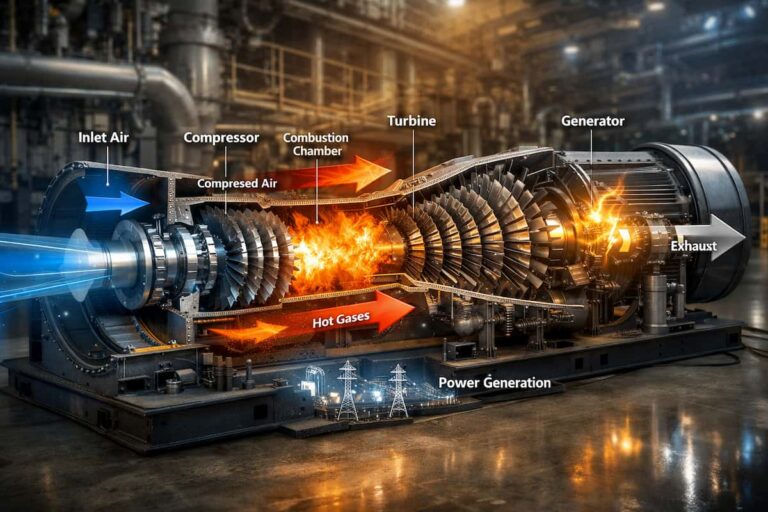
The axial compressor is the lungs of your turbine. Over time, salt, dust, and aerosols build up on the blades, leading to compressor fouling.
The Mistake: Delaying compressor washing until there is a noticeable drop in power. By the time you notice a 5% drop in output, the turbine has already been wasting fuel for hundreds of hours. Fouling is the single largest source of recoverable performance degradation.
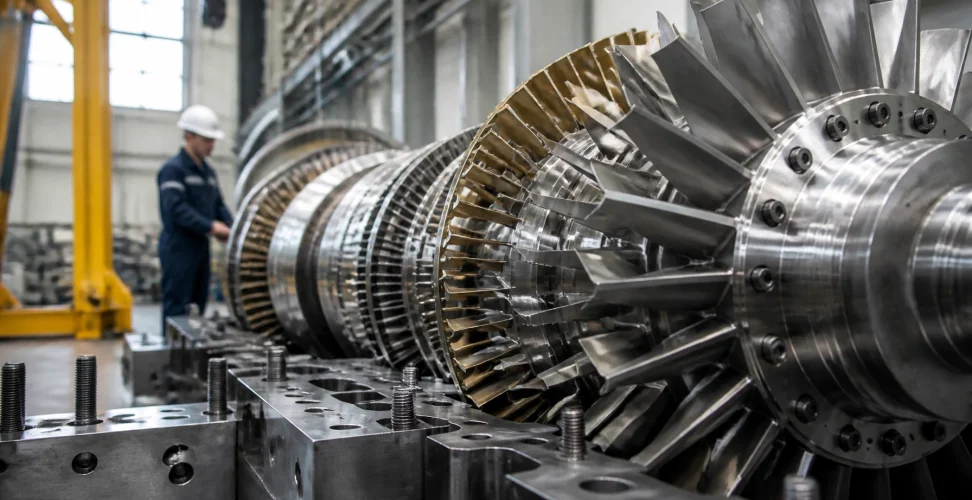
The Fix: Establish a programmatic compressor washing schedule based on pressure differential (DP) and heat rate tracking. Regularly inspect your compressor rotor and stator blades for signs of erosion or pitting. Maintaining a clean compressor is one of the most cost-effective ways to improve your facility’s efficiency.
6. Overlooking Fuel Nozzle Performance Decay
The combustion system is where the “magic” happens, but it’s also where some of the most intense wear occurs. Fuel nozzles are subject to extreme heat and potential coking, which can distort the flame pattern.
The Mistake: Running fuel nozzle assemblies until they cause a trip. A degraded nozzle creates uneven heat distribution in the hot gas path, which significantly accelerates the “creep” and cracking of your Stage 1 buckets.

The Fix: Regularly inspect and refurbish your fuel nozzles. We supply high-performance fuel nozzles and fuel system components that meet or exceed OEM specifications. Ensuring a clean, balanced burn is essential for protecting your expensive hot-gas-path hardware.
7. The “OEM or Nothing” Fallacy
Many operators believe that only parts directly from the original manufacturer can ensure reliability. While this was perhaps true decades ago, the modern aftermarket has evolved significantly.
The Mistake: Paying a premium for the “name” while sacrificing delivery speed and flexibility. This rigid approach limits your ability to respond to emergencies and can bloat your maintenance budget without providing additional safety or performance.
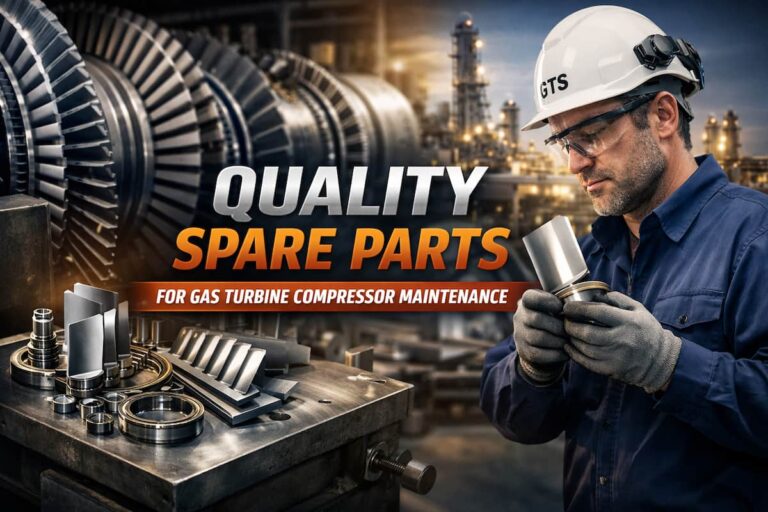
The Fix: Adopt a “Strategic Alliance” mindset. GTS provides OEM-equivalent gas turbine parts that are 100% interchangeable with the originals. From bucket installation hardware to complex bearings and deflectors, our components are engineered from the same high-grade superalloys and materials as the OEM parts, but with the added benefit of competitive pricing and faster response times.
Navigating the Future of Your Fleet
Effective gas turbine maintenance is about minimizing operational risk through precision, speed, and reliable data. By avoiding these seven common mistakes, you can extend the life of your assets, improve your plant’s heat rate, and ensure you are ready for the demands of the energy market.
At Global Tech Services, LLC (GTS), we don’t just supply parts; we provide solutions that empower your maintenance team. Our commitment to quality: backed by our ISO 9001 certification: means you never have to choose between reliability and speed.
Are you planning your next outage? Don’t be held back by OEM lead times or generic parts. Contact our technical consulting team today to discuss your specific needs and see how a strategic partnership with GTS can revolutionize your maintenance strategy.