
Unplanned downtime is one of the most expensive risks in power generation. When a gas turbine trips or cannot return to service after a planned outage, your facility loses generation capacity, disrupts production schedules, and may face costly replacement power or contractual penalties.
The turbine failure itself is not always what makes the outage long. Parts lead time is often the real bottleneck.
A critical fuel nozzle, vibration sensor, pressure transmitter, bearing, seal, or combustion component may be relatively small compared with the turbine. However, if it is unavailable, the entire unit can remain offline while your team waits for an OEM quotation, manufacturing slot, export documentation, or international freight.
A 30% reduction in downtime is not a universal guarantee. It is an achievable operational target when you combine better critical-spares planning, qualified OEM-equivalent suppliers, predictive maintenance, and faster logistics. The objective is straightforward: get the right gas turbine spare parts to your maintenance team before they become outage-limiting parts.
Where Gas Turbine Downtime Actually Comes From
Maintenance teams often focus on the technical cause of a trip. Procurement teams focus on price and purchase orders. Both are important, but downtime usually grows because of supply-chain decisions made before the failure occurs.
1. Extended supplier lead times
Some turbine components are made to order or routed through centralized OEM supply chains. Depending on the part, configuration, and production schedule, an OEM quote may carry a 26+ week lead time.
That timeline may be acceptable for a long-range overhaul plan. It is not acceptable when the unit is already offline.
2. Single-source dependency
Relying exclusively on one source limits your ability to respond when:
- The OEM has no available stock
- A part is obsolete or subject to allocation
- The quotation process takes too long
- The component must be manufactured rather than dispatched
- The supplier cannot support your required delivery location
A single-source strategy may appear simple, but it can create significant operational exposure.
3. Insufficient critical-spares inventory
Not every part belongs on the shelf. However, certain turbine components have a combination of high failure impact and long replenishment time. If these parts are not available locally or through a dependable stocking agreement, a minor equipment issue can become a prolonged forced outage.
4. Waiting for technical confirmation
Incorrect part identification creates further delays. Maintenance and procurement teams may need to confirm:
- Turbine frame and model
- Serial number or unit configuration
- Original part number
- Revision level
- Material or coating requirements
- Interchangeability
- Documentation and certification requirements
A supplier that can quickly validate this information helps reduce administrative downtime as well as physical delivery time.

The Smarter Gas Turbine Spare Parts Sourcing Playbook
1. Classify parts by criticality and lead time
The first step is to build a practical parts-risk matrix. Classify each item according to two factors:
- How severely would failure affect operation?
- How long would it take to replace or replenish the part?
A simple model can divide turbine components into three categories:
| Category | Typical impact | Recommended sourcing approach |
|---|---|---|
| Very critical | Causes a trip, failed start, or immediate production loss | Keep on site or secure through a guaranteed stocking agreement |
| Medium critical | Reduces output or operating flexibility | Maintain local access, pooled inventory, or rapid supplier support |
| Non-critical | Can wait for a planned maintenance window | Procure against the outage plan rather than carrying excessive stock |
Very critical items may include fuel system components, critical valves, starters, flame detection devices, pressure transmitters, and certain control or monitoring components. Medium-critical items may include redundant sensors, brackets, cables, and selected auxiliary components. Non-critical items may include standard gaskets, O-rings, nuts, bolts, and other general hardware.
This classification prevents two common errors: understocking parts that can stop the unit and overstocking parts that do not require immediate availability.
2. Keep high-risk components available before failure
Your critical-spares strategy should reflect the operating environment, turbine model, failure history, and maintenance schedule.
For many facilities, the priority list includes:
- Hot gas path components
- Fuel nozzles and fuel nozzle assemblies
- Flame detectors and thermocouples
- Pressure and vibration sensors
- Bearings and deflectors
- Gaskets, seals, and O-rings
- Combustion liners and transition pieces
- Compressor blades and associated hardware
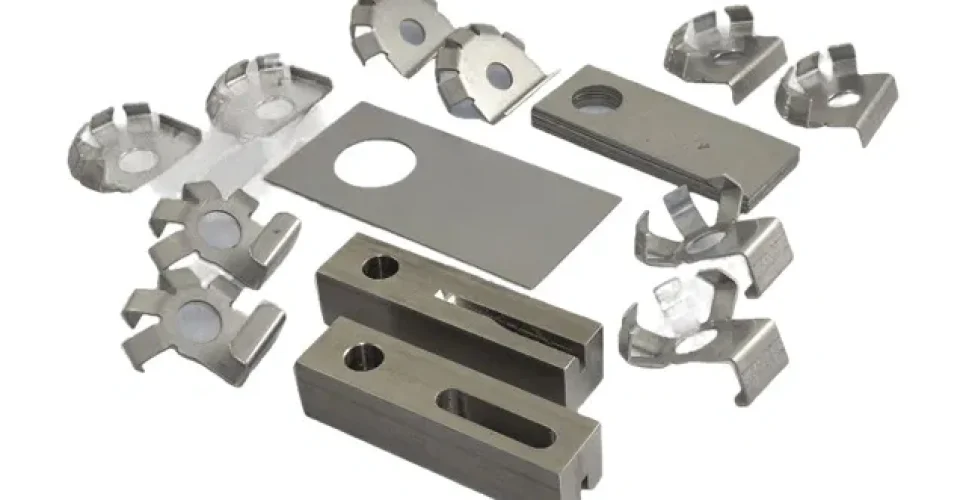
- Bucket installation hardware
- Valves, actuators, and control components
You do not necessarily need to purchase every item in large quantities. Instead, define minimum and maximum stock levels based on failure probability, supplier lead time, unit criticality, and the financial impact of lost generation.
For high-value internal turbine parts, a stocking agreement or pre-approved supplier arrangement may provide the right balance between inventory investment and outage protection.
3. Use qualified OEM-equivalent suppliers to improve response time
OEM parts can provide clear benefits, including established design documentation and traceability. However, OEM should not automatically mean your only sourcing option.
Qualified OEM-equivalent suppliers can help you:
- Access in-stock turbine components
- Reduce dependence on long manufacturing schedules
- Compare technical and commercial options
- Lower acquisition costs
- Support legacy or hard-to-source turbine frames
- Expedite delivery during unscheduled outages
The key is qualification. An OEM-equivalent component should not be selected solely because it is cheaper or immediately available. Your team should verify that the part is suitable for the specific turbine application and supported by appropriate technical documentation.
Ask suppliers for:
- Dimensional inspection records
- Material certificates
- Applicable non-destructive testing records
- Coating or heat-treatment information
- Traceability documentation
- Inspection and test reports
- Warranty terms
- Clear identification of original and equivalent part numbers
This approach allows you to reduce lead time without trading downtime risk for reliability risk.
4. Consolidate turbine components with one qualified supplier
Managing multiple suppliers for fuel system, combustion, compressor, instrumentation, sealing, and general mechanical parts can create unnecessary complexity. Each additional supplier introduces another quotation process, technical review, purchase order, shipment, and set of delivery risks.
A qualified component partner can consolidate several categories, including:
- Fuel system components
- Bearings and deflectors
- Compressor parts
- Combustion system components
- Sensors
- Gaskets and seals
- Bucket installation hardware
- General spares
Consolidation can shorten the RFQ cycle, simplify documentation, reduce freight coordination, and give your maintenance team a single technical point of contact.

5. Plan around turbine configuration and part-number accuracy
Gas turbines are not interchangeable simply because they share a brand or frame family. Configuration, revision, application, and site modifications can affect the correct replacement part.
When requesting a quote, provide as much information as possible:
- Turbine manufacturer and model
- Frame designation
- Site and unit number
- Original part number
- Description and quantity
- Drawing or specification reference
- Required delivery date
- Condition requirements
- Documentation requirements
GTS supports inventory for turbine platforms including Frame 5, Frame 6, Frame 9, Siemens V64.3, and Siemens V94.2.
Accurate identification allows your supplier to verify fitment faster and reduces the risk of receiving a part that cannot be installed when the maintenance window is open.
6. Connect predictive maintenance with procurement
Predictive maintenance is most valuable when it results in an action before failure. Vibration trends, exhaust temperature deviations, pressure changes, combustion dynamics, and inspection findings should influence your spare-parts plan.
For example:
- Condition monitoring identifies abnormal vibration.
- Engineering determines that a sensor or bearing may require replacement.
- Procurement checks supplier lead time and stock position.
- The part is ordered or reserved before the next outage.
- Maintenance installs it during a controlled window.
This turns procurement from a reactive function into an operational risk-control function.
A Siemens Energy spare-parts management case study illustrates how unified configuration and parts data can help service teams identify identical parts, improve recommendations, and prepare outage-specific packages.
How These Actions Can Deliver 30% Less Downtime
The reduction does not come from one sourcing decision. It comes from removing several delays that compound during an outage.
A plant may reduce downtime by:
- Eliminating days spent waiting for an initial quotation
- Replacing a 26+ week manufacturing lead time with an available equivalent
- Avoiding incorrect-part shipments and reorders
- Consolidating multiple purchase orders into one coordinated shipment
- Pre-positioning sensors, seals, fuel system components, and hardware
- Ordering components when predictive indicators identify developing risk
- Establishing expedited logistics and clear emergency contacts
The result is a shorter path from failure identification to part verification, shipment, installation, and return to service.
The VBR strategic spare-parts planning framework similarly emphasizes criticality classification, lead-time management, supplier selection, and stock positioning as core elements of improving turbine availability.
GTS: Your Strategic Partner for Turbine Components
Global Tech Services, LLC helps power generation facilities and industrial operators source high-quality gas turbine spare parts and turbine components with greater speed and commercial flexibility.
With 38 years of industry experience, an ISO 9001-certified quality management system, and access to global inventory and sourcing partners, GTS supports major turbine brands including:
- General Electric®
- Westinghouse®
- Nuovo Pignone®
- Siemens®
Our objective is not simply to supply a part. It is to help you minimize outage exposure through:
- Faster delivery than traditional OEM lead times
- Competitive pricing
- Complete parts availability across multiple categories
- OEM-equivalent performance and dependable quality
- Responsive technical and procurement support
Review the GTS inventory or explore the complete product range. If your turbine is offline or a planned outage is approaching, contact GTS with your part number, frame, quantity, and required delivery date.
The right sourcing strategy can protect generation, control maintenance costs, and return your turbine to service faster. Start the conversation with GTS today.