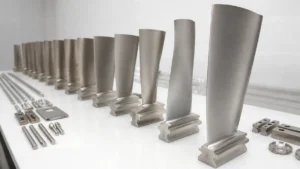
For plant managers and turbine engineers, deciding what to do with damaged turbine rotor blades is a high-consequence maintenance decision. The wrong choice can increase outage duration, compromise efficiency, or expose the turbine to avoidable mechanical risk.
A blade may be repairable after tip wear or minor foreign object damage. However, extensive creep, root cracking, or material degradation may make replacement the safer and more economical option. The decision must consider more than the purchase price. Damage location, remaining life, inspection results, repair qualification, lead time, and the cost of lost generation all matter.
This guide explains when to rebuild, replace, or refurbish turbine rotor blades and related turbine components, including compressor rotor blades and stator blades.
Why Blade Condition Directly Affects Turbine Reliability
Rotor blades and compressor blades operate in demanding environments. Depending on their location, they are exposed to:
- High centrifugal loading
- Thermal cycling during starts and shutdowns
- Vibration and resonance
- Erosion from steam droplets or particulates
- Corrosion and oxidation
- Foreign object damage (FOD)
- Tight aerodynamic clearances
- High-temperature creep and fatigue
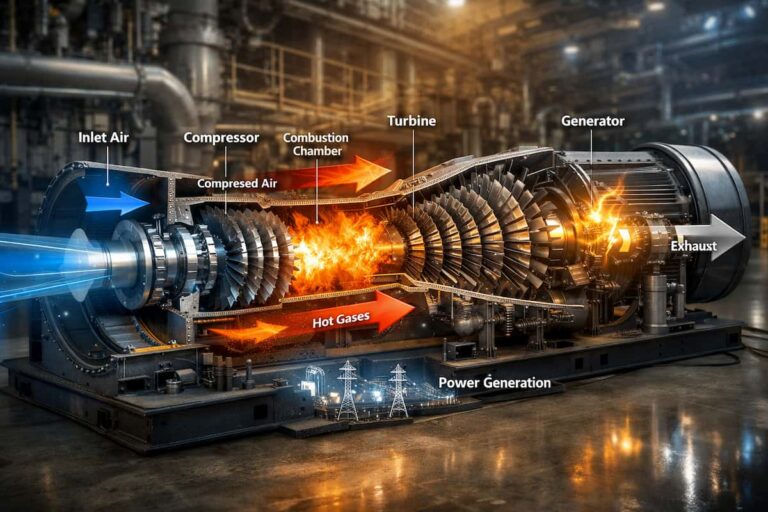
In a gas turbine, hot-section rotor blades may be manufactured from nickel-based superalloys designed to withstand high temperature, stress, and oxidation. In an aeroderivative or heavy-duty industrial machine, the blade design, coating system, attachment geometry, and operating profile can differ significantly.
The compressor section faces a different risk profile. Compressor rotor blades and stator blades commonly experience FOD, erosion, fouling, fatigue, tip rubbing, and dimensional wear. Even relatively small defects can affect airflow, compressor efficiency, exhaust gas temperature, fuel consumption, and surge margin.
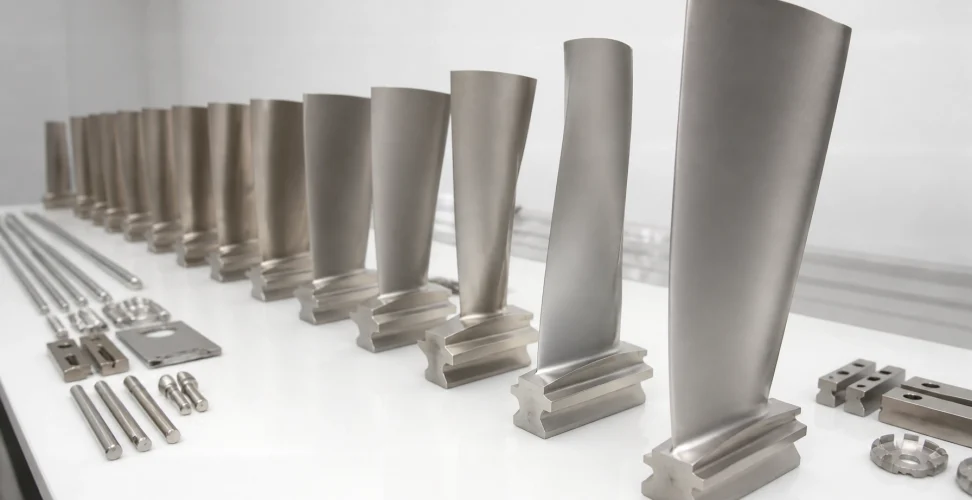
GTS supplies OEM-equivalent compressor parts for major turbine platforms, including rotor blades, stator blades, IGV and EGV components, gears, racks, shims, keys, and spacers.
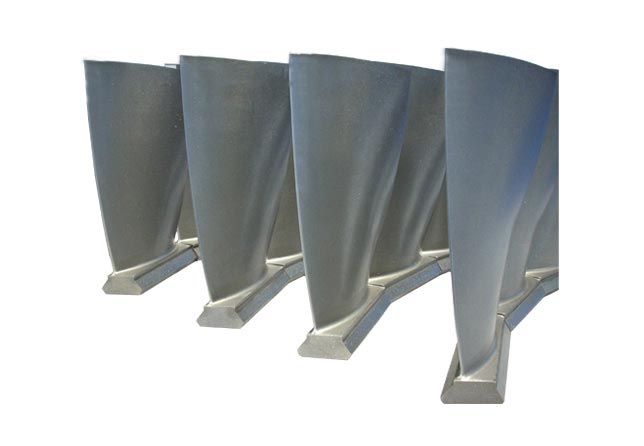
When Should You Inspect Turbine Rotor Blades?
Inspection should not begin only after a blade fails. Planned inspections help identify defects while they remain within a manageable repair or refurbishment range.
Common inspection triggers include:
- A scheduled minor or major outage
- A borescope finding in the compressor or turbine section
- Abnormal vibration or changes in vibration spectrum
- Rising exhaust gas temperature
- Reduced output or worsening heat rate
- Increased compressor discharge temperature
- Evidence of compressor fouling or performance deterioration
- FOD at the inlet or compressor stages
- Tip rubbing, clearance changes, or unusual noise
- Exceeding a defined number of operating hours or starts
- A known fleet issue affecting the same turbine model
- Operation in corrosive, coastal, dusty, or chemically aggressive environments
Inspection methods may include visual examination, borescope inspection, dimensional checks, dye penetrant testing, magnetic particle testing, eddy current inspection, ultrasonic testing, and metallurgical analysis.
For hot-section blades, operators may also require a remaining-life assessment based on operating temperature, stress history, start-stop cycles, and OEM lifing requirements. A blade that appears acceptable visually may still have subsurface cracking, microstructural degradation, or creep damage.

Four Damage Modes That Drive the Decision
1. Creep and High-Temperature Degradation
Creep is the gradual deformation of metal under sustained stress at elevated temperature. In turbine rotor blades, it can cause elongation, distortion, tip wear, or contact with stationary hardware.
Creep is particularly important in first-stage and other hot-gas-path components. Once creep affects a critical section, repair may not restore the original material properties or remaining life. Replacement is often the more responsible path.
Refurbishment may still be considered for localized tip wear if:
- The base material retains adequate integrity
- The damage is limited to a lower-stress region
- Geometry can be restored accurately
- The repair process is qualified for the blade material
- Heat treatment and inspection requirements can be met
2. Fatigue and Cracking
Low-cycle fatigue is associated with repeated thermal and mechanical stress during starts, shutdowns, and load changes. High-cycle fatigue can be driven by vibration, resonance, or sudden mechanical events.
Cracks near the blade root, dovetail, platform, attachment lugs, or other highly stressed regions require careful engineering evaluation. Root cracking is generally more serious than superficial tip damage.
A small, well-characterized crack in a repairable area may be removed by controlled blending or machining, followed by an approved weld repair and non-destructive testing. A crack that extends into a critical load-bearing section may require individual blade replacement or replacement of the complete blade row.
3. Foreign Object Damage
FOD is common in compressor sections and can also affect turbine stages. Ingested debris may create nicks, dents, gouges, or leading-edge damage.
Minor compressor blade damage can sometimes be blended within approved limits. More substantial damage may require weld build-up, laser cladding, re-profiling, or replacement.
The key concern is not appearance. It is whether the repair preserves:
- Aerofoil geometry
- Local thickness
- Surface finish
- Material strength
- Balance and rotor dynamics
- Resistance to future crack initiation
4. Corrosion, Oxidation, and Erosion
Steam turbine last-stage blades may suffer erosion from water droplets. Gas turbine blades may experience oxidation and hot corrosion, especially in marine or chemically aggressive environments.
Corrosion and erosion can often support a refurbishment strategy when the damage is limited to the surface or tip. The process may involve cleaning, stripping, blending, material deposition, heat treatment, machining, coating, and final inspection.
However, widespread section loss or corrosion at the blade root can make refurbishment uneconomical or technically unsuitable.
Rebuild, Replace, or Refurbish: What Is the Difference?
Rebuild
A rebuild normally involves restoring a component or assembly to a usable operating condition through a defined repair process. It may include machining, weld restoration, replacement of attachment hardware, dimensional correction, coating, and final inspection.
Rebuilding is most appropriate when the blade’s primary material and load-bearing structure remain sound.
Refurbish
Refurbishment typically focuses on recovering serviceable geometry and surface condition. It may include:
- Cleaning and stripping
- Blending minor FOD
- Tip restoration
- Re-profiling
- Coating renewal
- Surface finishing
- Dimensional verification
- Non-destructive testing
Refurbishment is often attractive for localized wear, erosion, and surface damage.
Replace
Replacement is usually required when the blade has extensive creep, root cracking, severe fatigue, major section loss, or material degradation that cannot be reliably restored.
Replacement may involve:
- One blade
- A matched set
- A complete blade row
- Rotor and stator components
- Related seals, shims, keys, or installation hardware
Replacing only one blade is not always the correct answer. Your engineering team must consider mass, geometry, balance, material condition, and the requirements of the turbine’s rotating assembly.
Comparing Cost and Lead Time
There is no universal price for turbine rotor blades. Costs vary by turbine frame, blade stage, alloy, coating, quantity, documentation, inspection requirements, and whether the component is new or repairable.
A practical comparison should include:
| Option | Direct cost | Typical schedule impact | Best suited for |
|---|---|---|---|
| Localized rebuild | Lowest in many cases | Days to weeks | Limited, repairable damage |
| Refurbishment | Lower than new replacement | Days to several weeks | Tip wear, erosion, corrosion, minor FOD |
| New blade replacement | Higher | Weeks to months | Severe damage or life-limited parts |
| Complete row replacement | Highest capital cost | Potentially months | Extensive fleet or row-level degradation |
Industry experience reported by the Combined Cycle Journal indicates that qualifying onsite or in-situ repairs for certain steam turbine last-stage blades can cost at least 50% less than replacement and may be completed within a few weeks. If blades must be shipped to a repair shop, the schedule can increase substantially.
For gas turbine blade-tip restoration, technologies such as laser cladding, Cold Metal Transfer, and Direct Metal Laser Melting can be part of a qualified repair process. A technical and economic study published through the Proceedings of the Institution of Mechanical Engineers emphasizes that repair qualification, metallurgical integrity, dimensional accuracy, and post-repair inspection are essential.
Your business case should calculate:
Total decision cost = part cost + repair cost + logistics + engineering + outage cost + risk exposure
A lower-priced blade is not a saving if it extends the outage or creates repeat failures.
How Qualified OEM-Equivalent Parts Protect Your Outage Schedule
OEM supply remains appropriate when your specifications, warranty, insurer, or regulatory requirements demand it. However, OEM lead times and pricing may not align with an urgent outage or an aging turbine platform.
A qualified OEM-equivalent supplier can help you navigate this constraint by providing components designed for interchangeability with the applicable turbine model and service conditions.
For turbine components such as compressor rotor blades and stator blades, qualification should address:
- Correct material or alloy specification
- Heat treatment and mechanical properties
- Aerofoil and platform geometry
- Root and attachment dimensions
- Coating and surface requirements
- Dimensional inspection records
- Traceability and quality documentation
- Compatibility with the turbine’s operating environment
GTS supports major brands including General Electric®, Siemens®, Westinghouse®, and Nuovo Pignone®. Our OEM-equivalent parts approach is focused on combining reliable performance with competitive pricing and faster delivery than traditional OEM sourcing.

A Practical Decision Framework for Your Plant
Use the following sequence during an outage planning review:
- Confirm the damage mechanism. Separate creep, fatigue, FOD, corrosion, erosion, and manufacturing or installation-related damage.
- Locate the damage. Tip damage is often more repairable than root or attachment damage.
- Complete NDT and dimensional inspection. Do not approve a repair based only on visual condition.
- Verify repair limits. Confirm that the proposed process is qualified for the blade material, coating, geometry, and operating environment.
- Compare total cost. Include lost generation and schedule risk, not only the part price.
- Check availability. Confirm whether a qualified replacement or matched set is available within your outage window.
- Review related turbine components. Inspect seals, shims, keys, spacers, IGVs, EGVs, and installation hardware at the same time.
- Document the decision. Record inspection findings, repair limits, material data, and acceptance criteria for future life management.
Build a Smarter Blade-Sourcing Strategy With GTS
The right blade decision protects more than your maintenance budget. It protects your plant’s availability, safety margins, efficiency, and long-term asset value.
Rebuild or refurbish when damage is localized and the component’s integrity can be qualified. Replace when life, geometry, or structural reliability cannot be assured. In both cases, early inspection and dependable parts availability are critical.
GTS supplies OEM-equivalent compressor parts and related turbine components for power generation and industrial facilities worldwide. Our team can help you review rotor blade, stator blade, and associated spare requirements for an upcoming outage.
Contact GTS to discuss your turbine model, inspection findings, part numbers, and required delivery schedule. Build a strategic sourcing partnership that helps you minimize downtime while maintaining the reliability your turbine fleet demands.